


Training Intentionality: The Grumpy Way


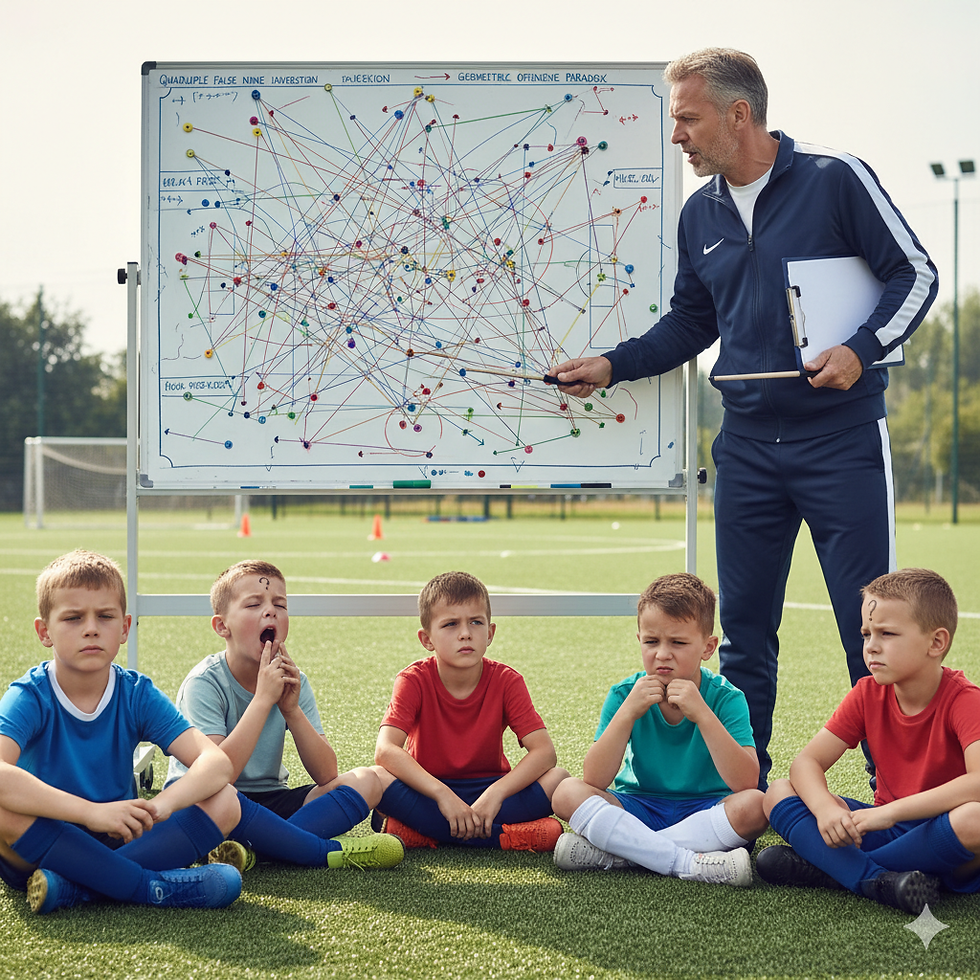
The article "Football, Culture, Skill Development and Sport Coaching" (Vaughan et al., 2021) is a breath of fresh air—and a validation of the "Grumpy" way of thinking. For too long, youth soccer has been sterilized by an obsession with "drills" and "shared mental models." Coaches stand over kids with clipboards, barking about "overlapping runs" and "defensive triangles" as if they are programming a video game. This paper exposes the flaw in that logic: it creates players who have an understanding about football, but no understanding in football.
At the heart of the Grumpy Soccer philosophy is a rejection of the "organismic asymmetry" the authors describe—the idea that skill lives solely inside the athlete’s head or feet. Skill isn't a library of moves you download; it’s a relationship between the player and the environment. When we talk about being "intentional" at the core of training, we aren't talking about players thinking harder; we are talking about players becoming more attuned to the "values" of the game.
To build intentionality into a training system, we have to stop treating training sessions as blank slates. As the paper suggests, every session is weighted with social and cultural significance. If a coach spends the entire session "joysticking" players, they are unintentionally teaching the "value" of obedience over the "value" of perception.
In a Grumpy-informed system, we prioritize Skilled Intentionality. This means moving away from abstract concepts and toward the "Language of Skilled Intentions." Instead of telling a U17 player to "find the inner corridor," we design environments—like a high-stakes Rondo or a constrained small-sided game—where the "gap" in the defense "stands out" as a solicitation for action. The intention is born from the game’s constraints, not the coach’s voice.
We build intentionality by "shaping" the environment so that certain affordances—like a deceptive pass or a change of pace—become the most valuable solutions. We want players who don't just "see" a pass, but who "feel" the invitation of the space. That is the difference between a player who follows a tactic and a player who is the tactic.
Building Players On and Off the Pitch
The most profound takeaway from this paper is the link between "forms of life" and skill. The authors use the "Ginga" of Brazilian football to show how culture (Samba, Capoeira) translates into deceptive dribbling. This has massive implications for youth development in our own backyard. Do we know what our players home life is like? What does our community look like? What affordances do they have? How do you take include this in your program, delivery, player tools, mentoring, self reflections?
On the Pitch: We must recognize that our players bring their "form of life" to the field. If our culture is one of risk-aversion and fear of failure, our players will develop skills that are defensive and rigid. To build creative, intentional players, we must foster a sub-culture within our clubs that values "malandragem"—the deceptive trickery mentioned in the paper. We build the player by building a culture that "invites" creativity.
As a coach, remember the last time you observed and decided a player took too many touches. Did you ask why? If you did, do you understand the answer as it relates to the player? How many players choose not to pass out of fear? Fear of it not getting there, not trusting the player on the other end of the pass, not trusting themselves, not seeing it because they are so focused on not making a mistake?

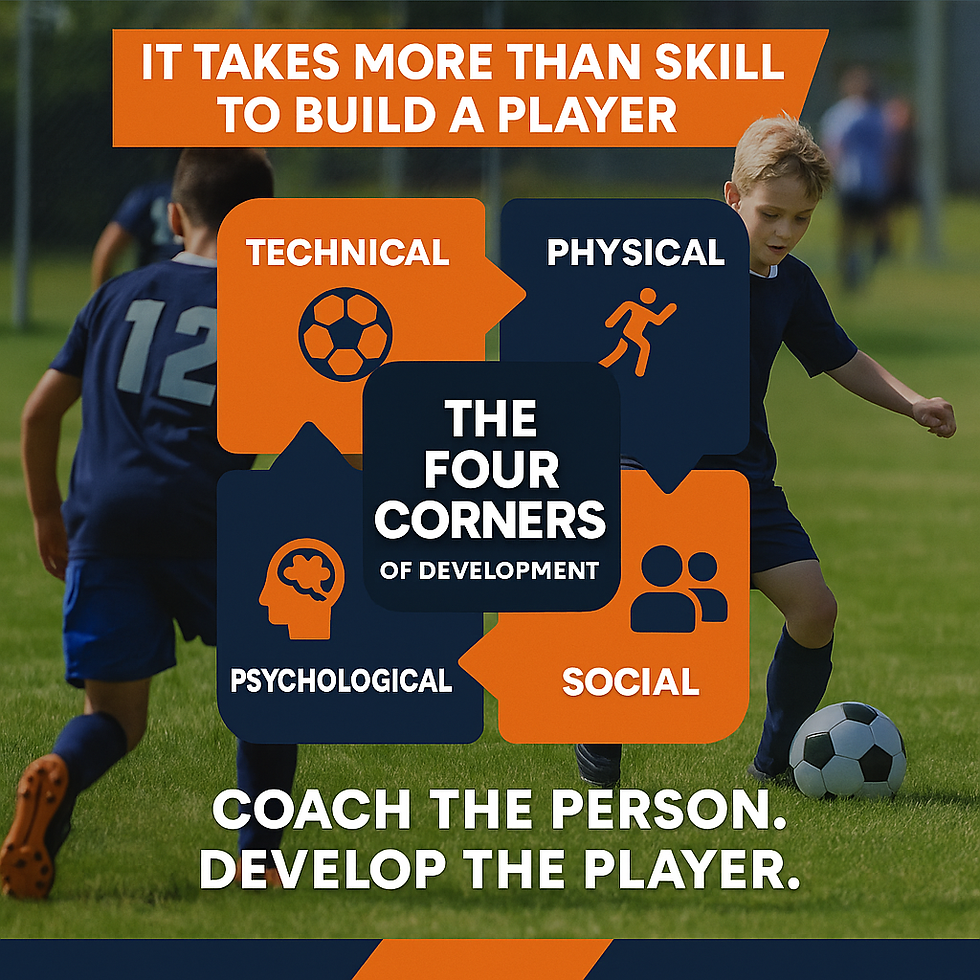
Off the Pitch: This is where we bridge the gap to youth leadership. Intentionality is a life skill. By moving away from "decontextualized knowledge" in soccer, we are teaching kids how to read environments in the real world. A player who learns to perceive "affordances" on the pitch—seeing opportunities where others see obstacles—is a youth who will do the same in their education and community.
We are not just building soccer players; we are building "skilled intentionality" in young humans. We are teaching them that their actions are value-directed. If they learn to be intentional about the "values" they express on the pitch—courage, deception, cooperation—they are inherently learning to be intentional about the "form of life" they want to lead off it.
The Grumpy Conclusion
The authors hit the nail on the head: if
we don't skillfully attend to the sociocultural constraints of our training, the environment will do it for us. A coach who doesn't understand this is just a passenger. At Grumpy Soccer, we aren't interested in being "TV commentators" who talk about the game. We are architects of environments where players develop the "Ginga" of their own lives, rooted in a deep, intentional connection to the world around them.
Start shaping the "intention." The game—and the kids—will be better for it.


Comments